
“The Cuts That Hit Home: How One Decision Sparked a Storm—and Why Millions Are Paying Attention”
 When the announcement first came, it felt almost invisible—just another line tucked inside a government memo, another policy shift folded quietly into a crowded news cycle. But for thousands of Americans and Britons who have lived long enough to understand how quickly stability can vanish, the news landed like a cold wind:
federal cuts to homeless housing programs.
For many seniors, veterans, single parents, and families scraping by, housing is not an abstract political concept. It is the memory of the home they once fought to keep. It is the echo of nights when they slept in their car. It is the fear that one medical bill, one crisis, one layoff could unravel everything.
So when former President Donald Trump claimed the funding cuts were simply “saving taxpayers money,” the reaction was immediate—but no one predicted what would happen next.
Because less than 24 hours later, Gavin Newsom stepped into the moment with three actions that sent a shockwave across the nation.
Action One: A Lawsuit That Spoke for Millions

Newsom, joined by 19 other states, filed a sweeping lawsuit against the Trump administration.
His argument was simple, almost painfully so:
The federal government had no right to rewrite Congress’s rules. No right to take from people who had already lost so much.
For many older Americans who have watched decades of political back-and-forth, this lawsuit wasn’t just a legal maneuver—it was a reminder that checks and balances still matter, that someone was willing to push back.
The filing detailed something troubling: that funding eligibility had been altered without congressional approval, without data, without justification.
For those who once relied on shelters, community housing, and care networks, it felt like the government was quietly closing a door that had once saved them.
Action Two: A Promise California Refused to Break

Within hours, Newsom made a second move—this one aimed squarely at the people who would feel the cuts most.
He announced that California would continue providing $56 million to local governments so vulnerable youth could stay in safe, stable housing.
The commitment included an additional investment made in early October—money already flowing into programs that keep teenagers off the street and give them a lifeline that many adults today never had.
For parents and grandparents who remember raising kids in uncertain times, this wasn’t politics.
It was protection.
It was responsibility.
It was what leadership is supposed to look like.
Action Three: Forcing a National Conversation We Can’t Ignore

The third action wasn’t a document.
It wasn’t a dollar amount.
It was a spark.
Newsom took the issue public—loudly, unapologetically—dragging a quiet policy change into the national spotlight.
And suddenly the country was talking:
What happens to the young people sleeping in shelters tonight?
What happens to families hanging on by a thread?
Why are we cutting from the people with the least?
For older Americans who lived through recessions, inflation waves, housing crises, and decades of shifting political winds, the conversation hit a nerve.
Because they know the truth:
Any one of us can become vulnerable.
All it takes is misfortune arriving faster than help.
A Moment Bigger Than Politics
What Newsom did wasn’t about partisanship.
It was about dignity—human dignity—and the belief that a nation is judged not by how it treats its most successful, but by how it treats its most fragile.
For readers who are 45, 55, 65 and beyond—people who have watched leaders rise and fall, programs built and dismantled—this story resonates because it reflects a simple reality:
We remember what it feels like to be afraid.
We remember what it feels like to hope.
And we know that every decision made in a faraway office eventually reaches someone’s front door.
Whether this lawsuit succeeds, whether the funding is restored, whether the conversation grows or fades—none of us can say.
But for one brief moment, in a divided and distracted political landscape, millions of Americans paused.
Because they recognized that behind every number is a family.
Behind every program is a child.
And behind every political battle is a question we must keep asking:
Who are we, if we stop fighting for them?
Adam Silver’s “Caitlin Clark” Comment Just Backfired — and Exposed the WNBA’s Deepest Secret
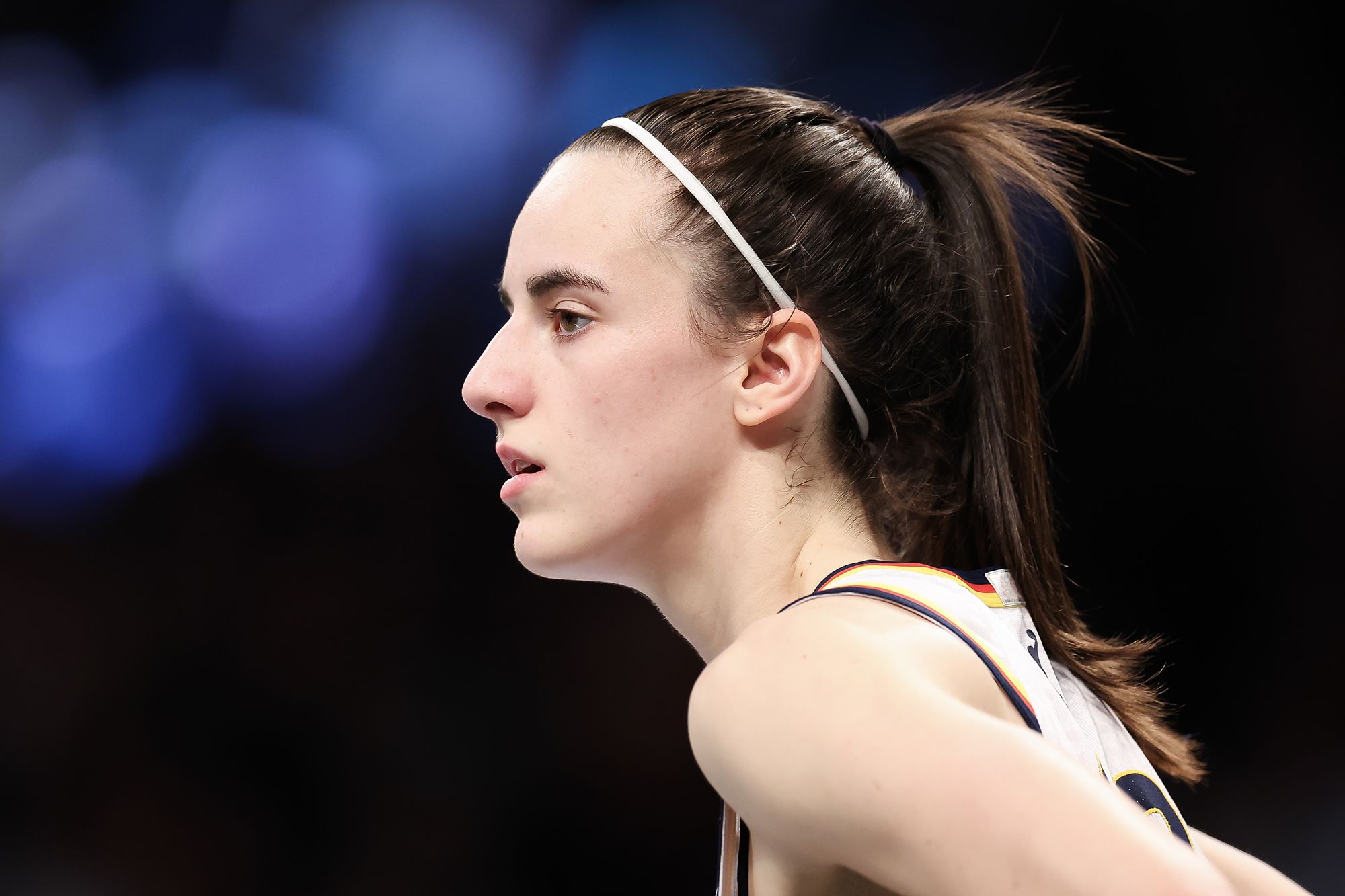
When NBA Commissioner Adam Silver sat down for what was supposed to be a simple, upbeat interview about the WNBA’s growth, no one expected him to drop a verbal nuke on the league itself. But within minutes, that’s exactly what happened.
Trying to praise the league’s “momentum” and “culture,” Silver accidentally admitted what insiders have whispered for months — that the WNBA is cracking from the inside.
“It’s not just about money,” he said, “but about relationship issues.”
Those five words detonated across social media like wildfire.
💣 What He Really Meant — and Why Fans Went Crazy
On the surface, it sounded harmless. But fans and analysts quickly decoded the subtext: Silver wasn’t talking about sponsorships or marketing. He was talking about the toxic disconnect between players and league leadership.
Translation: “The players and the people running the WNBA can’t stand each other.”
And that’s not speculation — players themselves have hinted at the same thing.
Behind the scenes, the WNBA’s internal rifts have been growing. From player compensation disputes to frustrations about scheduling, travel, and promotion, the message is clear: the league may be shining publicly, but privately it’s barely holding itself together.
🚨 The “Fake Ratings” Scandal
Silver didn’t stop there.
When he tried to calm the backlash by boasting about the league’s “rocket trajectory” in ratings, online sleuths immediately called foul.
Reports surfaced that the so-called record-breaking viewership might not be what it seems — with bars, gyms, and airport TVs being counted as “viewers.”
“So half the audience didn’t even know they were watching?” one fan wrote.
“That’s not growth. That’s a glitch.”
What was meant to be a defense turned into another disaster, fueling the idea that the WNBA’s numbers were padded — not earned.
💔 Candace Parker Drops the Bomb
And then came the real twist.
WNBA legend Candace Parker stepped in and said the quiet part out loud:
“I’ve gotten more love and texts from Adam Silver than from my own commissioner.”
Boom.
That one sentence undid every corporate talking point the league has tried to spin.
Fans erupted — not because Silver supported her, but because it confirmed that even the WNBA’s stars feel neglected by their own leadership.
🧨 Silver’s $85 Million Problem
Silver’s words have now left him in a mess that even his $85 million contract might not be able to fix.
He tried to bridge the gap between the NBA and WNBA — instead, he exposed the fracture line that runs through the league’s core.
Players feel under-promoted.
Executives feel underappreciated.
And the fans? They’re losing patience.
As one viral comment put it:
“The WNBA doesn’t have a Caitlin Clark problem. It has a leadership problem.”
⚡ What Happens Next
Silver has since tried to soften his comments, praising Caitlin Clark’s impact and calling her “the face of a new generation.”
But the damage is done.
The league’s credibility — already shaky from controversies, uneven coverage, and infighting — now faces an even bigger challenge: earning back the trust of the fans.
Because once the commissioner admits the empire’s cracking, no PR spin can glue it back together.

